Small Beginnings
As is the case with many tech giants, it can be hard to imagine the humble beginnings of the company that would one day dominate the wearable technology industry, however briefly.
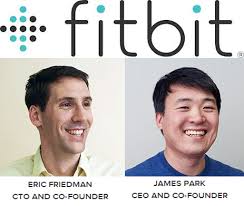
Started in 2007 by founders Eric Friedman and James Park, graduates of Yale and Harvard respectively, the original idea was to incorporate accelerometers, small sensors that measure acceleration forces, into wearable technology. This
idea came from the way The Nintendo Wii remotes combined sensors with software. The initial prototype of a Fitbit was nothing more than a circuit board inside a small balsawood box. It would take them two years after this to get the first Fitbit model up and running.
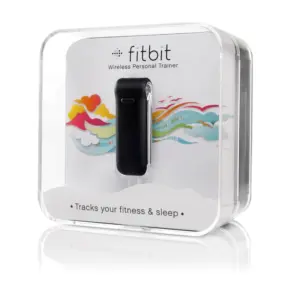
This initial Fitbit model that released in 2009 was much different than the ones you know today, and was little more than a step counter that tracked the amount of calories you burned and the amount of sleep that you got. Unlike modern models, it couldn’t connect to your phone, and instead came with a base that synced with your Fitbit when you came close.
This original tracker was often described as “firmware driven” due to the limited functionality and lack of any smart features. This device was paired with a website to do the more intensive tracking that the tracker itself was not yet capable of, such as documenting exercise routines, tracking weight, and meals.
The initial Fitbit models were simple step counters, without smart features like syncing with phones. Users relied on the base station to update their statistics, and more advanced tracking, like monitoring weight and meals, had to be done on the website.
Fitbit OS
In 2016, Fitbit acquired one of the pioneers of smartwatch technology, Pebble, with the intention of incorporating its intellectual property and talent. Pebble was known for its lightweight, simplistic operating system that was cross functional across both Android and iOS devices. Using this newly acquired resource, Friedman and Park began to develop their own, custom operating system, the Fitbit OS. Unlike Google’s Wear OS, or Apple’s watchOS, Fitbit OS was developed to focus more on apps and functionality that were more fitness-focused, with major attention being placed on longer battery life. This OS was launched for the first time with the Fitbit Ionic in 2017, Fitbit’s first true smartwatch. For the first time they could properly incorporate features such as notifications and music.
It was at this point that they also released the Fitbit SDK (Software Development Kit) to allow developers to crate apps and watch faces using JavaScript and SVG that could be used with the device. This allowed Fitbit to move beyond solely pre-installed functions and move to a customizable smartwatch ecosystem.
With each consecutive version of the Fitbit OS, the company introduced more features like more fluid navigation between the dashboard, notifications, and exercise modes. Fitbit SDK began appearing in the Fitbit App Gallery, bringing it to a wider audience. Fitbit OS 3.x (2019-2020) brought in local music storage in the Ionic and Versa lines, while the Fitbit OS 4.x included a Daily Readiness Score and an improved user experience.
Despite these gradual improvements, battery life and performance was always a key feature of the Fitbit experience.